MEMORANDUM
FROM: Lillian Mercho
DATE: March 30, 2023
SUBJECT: Deforestation Policies in Brazil
Introduction
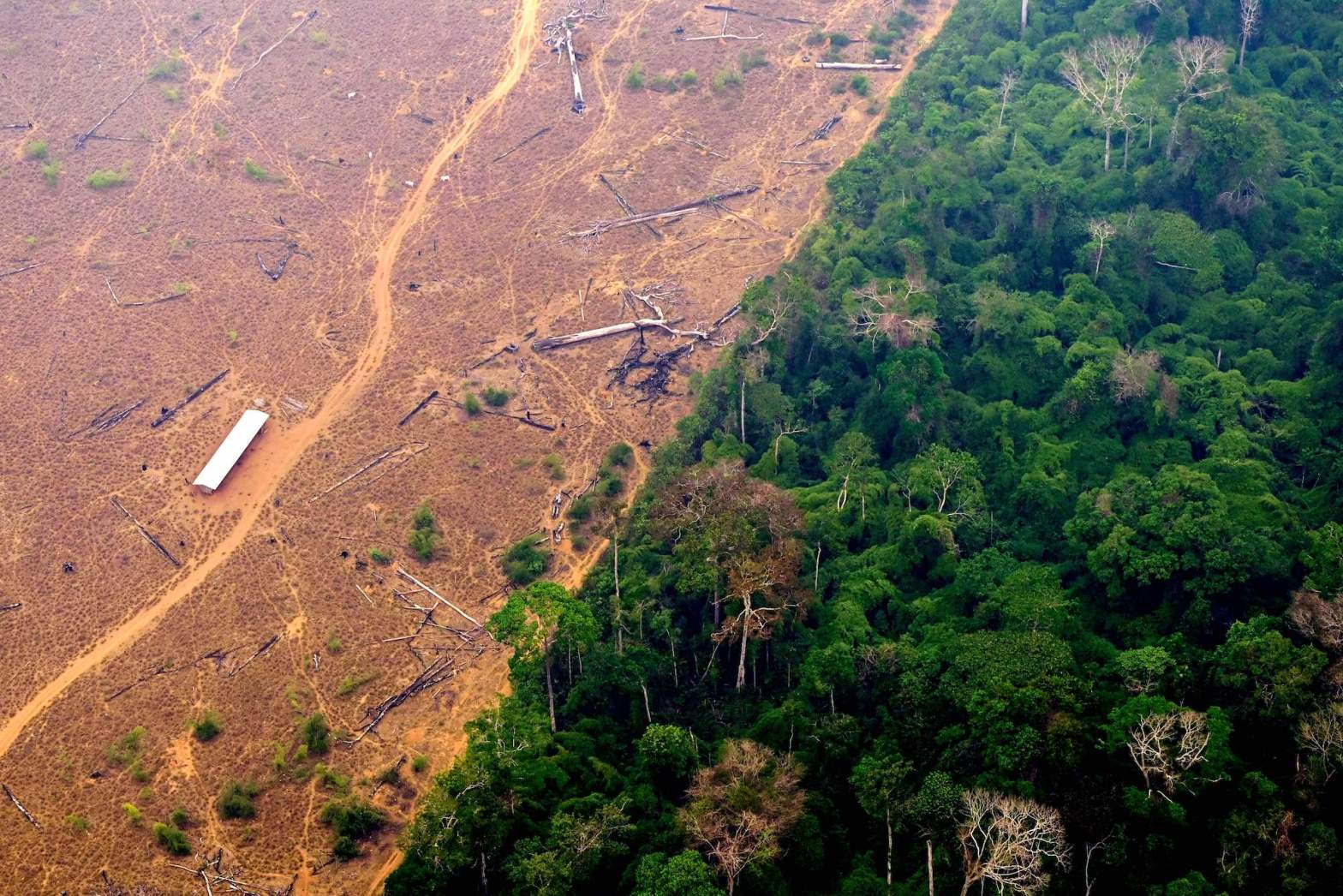
Brazil’s Amazon Basin, comprised of over 8.5 million square kilometers of forest, is facing unprecedented rates of deforestation. The loss of this rich forest land is directly contributing to an increase in carbon in the earth’s atmosphere, accelerated biodiversity loss, and ecological degradation. As the executive leadership of Brazil has changed over the past few decades, environmental policy and enforcement on deforestation prevention has ebbed and flowed. While deforestation has declined during certain periods, January 2022 was the highest deforestation rate of any January dating back to 2008 (Fountain, 2022) in Brazil. To combat deforestation, Brazil currently has several policy measures in place which build upon one another, including a Forest Code, the Cadastro Ambiental Rural (CAR) and the List of Priority Municipalities (LPM). These policies are crucial first steps, however, if the Brazilian government is going to curb deforestation to sustainable rates, significantly more policy and political solutions are needed.
Existing Deforestation Policies in Brazil
Forest Code
In 1965 Brazil passed its first Forest Code, a law requiring landowners in the Amazon to maintain 35-80 percent of their property under native vegetation (The Nature Conservancy, 2018). The implication of this policy is that rural farmers can only farm roughly 20 percent of their land. However, while this law is a crucial instrument in forest preservation, enforcement has historically been a challenge due to the sheer size and impermeability of Brazil’s section of the Amazon rainforest – about 1.5 million square miles – combined with limited federal and local resources. For the Forest Code to be effective, it relies on additional enforcement regulations and policies, outlined below. Between 2004-2012, the government prioritized enforcement of the Forest Code, resulting in an 84 percent decrease in deforestation (Fearnside, 2017). However, in 2012, President Bolsonaro relaxed the Forest Code, leading to steadily increasing rates of deforestation (Jung et al., 2017).
Cadastro Ambiental Rural (CAR)
To improve enforcement of the Forest Code, in 2010, the government of Brazil began requiring rural properties to be mapped in a federal registry called the Cadastro Ambiental Rural (CAR). This registry provides details on the size and spatial boundaries of all formal and informal land holdings, allowing the Brazilian government to better monitor compliance with the Forest Code (Cisneros et al., 2015). Prior to the implementation of CAR, only about 10 percent of private land in the Amazon was documented in ownership records (The Nature Conservancy, 2018). This improved system of record keeping in Brazil is a crucial first step for the government to better monitor and enforce the Forest Code. Additionally, it allows the government and non-governmental actors to work with landowners to help them reach compliance through initiatives like degradation restoration and sustainable forest use. However, CAR has also arguably also had negative effects on the livelihoods of many smaller local farmers as it requires they pay additional taxes and forego cultivating a large percentage of their land (Jung et al., 2017).
Priority Lists and Sanctions
Throughout President Lula da Silva’s presidency from 2003-2010, several enforcement measures were put in place to curb deforestation in the Brazillian Amazon. In 2007, he passed Presidential Decree 6.321, which created the List of Priority Municipalities (LPM) – essentially a priority list of districts with histories of high deforestation rates. Under this decree, priority districts were monitored more closely for deforestation and land degradation by Brazil’s environmental law enforcement authority, the Brazilian Institute for the Environmental and Renewable Natural Resources (Ibama). If farms in those districts were found to be skirting the law and illegally deforesting, Ibama responded with fines and embargoed those farms from trading until they complied with certain forest law and registration requirements (Assunção & Rocha, 2014). For example, meatpacking plants stopped buying cattle from embargoed farms (Assunção & Rocha, 2014). In the first edition of the list in 2008, 36 of 530 districts were named, and between 2008-2018, 62 districts were named (Massoca, 2020).
Following Decree 6.321, in 2008 the Brazilian Monetary Council (Conselho Monetário Nacional) published Resolution 3.545, “limit[ing] credit access to farms that are non-compliant with the Brazilian Forest Code and condition[ing] future credit access on proofs of compliance with environmental legislation” (Cisneros et al., 2015). Prior to Decree 6.321, landowners repeatedly held outstanding fines which could be appealed infinitely and were often never paid, rarely resulting in punishment. Through this system, the two decrees work together to enhance environmental legislation enforcement by immediately limiting credit access to landowners who have outstanding fines for illegal deforestation, and not allowing landowners to appeal (Fearnside, 2017). By imposing tight credit restrictions from government banks on large and medium landholders (the largest perpetrators of deforestation), this strategy resulted in an almost immediate decrease in deforestation from 2008 to 2012 (Fearnside, 2017).
Recommendations
While there have been periods of deforestation decline in Brazil, such as from 2004-2012, there has continued to be an overall rise in deforestation, largely due to a significant removal of restrictions from Brazil’s Forest Code in 2012 (Fearnside, 2017), weakened environmental agencies, and anti-environment rhetoric from Brazil’s president. This trend reveals the importance of government intervention and enforcement in reducing deforestation. As such, much more work is needed to curb deforestation and environmental degradation in Brazil’s Amazon Forest. Policymakers in Brazil should consider the following solutions:
- Increase protected forest areas.
Legally protecting designated environmental areas, including indigenous land, is essential to prevent the irreversible loss of biodiversity in the Amazon Forest. Currently, Brazil designates only 51% of its land as federally protected, but must increase this figure, and quickly (Cardoso da Silva et al., 2022). To protect about 80% of Brazil’s Amazon Forest, it would cost the country roughly USD ~$1.6 million of initial investment plus ~$2.8 billion annually (Cardoso da Silva et al., 2022) – overall not an unsustainable amount for a country as developed as Brazil. However, the government must do so as soon as possible. - End subsidies for loggers, ranchers, farmers, and others.
The legacy of farming subsidies from the government of Brazil as well as international funds for cattle ranches and soybean farms continue to contribute to deforestation today and must be ended (Fearnside, 2008). This strategy has proven to be effective once already between 2008 to 2012 when the Brazilian government was actively cracking down on subsidies and credit to non-compliant farms (Fearnside, 2017). - Crack down on corruption.
Illegal deforestation in Brazil is continuously linked to political corruption, as well as widespread violence, murders, drug trafficking, and money laundering (Muñoz, 2021). For example, under President Bolsonaro, the Minister of Agriculture, Blairo Maggi, was the largest soybean producer in Brazil and subsequently, one of the biggest perpetrators of deforestation (Bonato & Samora, 2016). The government of Brazil must crack down on rampant corruption which allows such back-door dealings to occur without accountability for the perpetrators. - Create economic alternatives
Currently, agriculture is one of the most profitable industries in Brazil, perpetuating the cycle of deforestation and unsustainable land use. Brazil should seek to create more alternative employment opportunities in urban centers. Additionally, Brazil should incentivize landowners to use their land in more sustainable ways (Fearnside, 2008). One feasible solution is eco-tourism – involving responsible travel to natural areas – which was instrumental in reversing deforestation in Costa Rica over the last 38 years (Konyn, 2021).
Conclusion
There are a number of strong policies in place in Brazil to combat deforestation and environmental degradation. However, these policies alone will not be effective until the underlying factors of forest clearing are addressed with deeper, more systemic changes. Additionally, what little environmental progress has been pushed forward in Brazil has historically been impeded by political turbulence and instability. This is evident from the stark differences in environmental policy between the administrations of Presidents Lula Da Silva, Dilma Rousseff, and Jair Bolsonaro, as well as from the impeachment of Dilma Rousseff in 2016 for corruption.
To tackle the driving forces of deforestation, the Brazilian government must come together once-and-for-all to implement more complex constitutional protections of the forest, end subsidies for the primary industries responsible for deforestation, crack down on the corruption allowing deforestation to purvey, and provide viable economic alternatives.
References
Assunção, J. J., & Rocha, R. (2014, September 24). Getting Greener by Going Black: The Priority Municipalities in Brazil. Climate Policy Initiative. Retrieved March 30, 2023, from https://www.climatepolicyinitiative.org/publication/getting-greener-going-black-priority-municipalities-brazil/
Bonato, G., & Samora, R. (2016, May 13). New Brazil AG minister seen friendly to business, maybe not to Amazon. Reuters. Retrieved March 30, 2023, from https://www.reuters.com/article/brazil-agriculture-maggi-idUSL2N18A0RS
Brazilian Amazon The Forest Code: Using Law to Protect the Amazon. The Nature Conservancy. (2018, July 1). Retrieved March 8, 2023, from https://www.nature.org/en-us/about-us/where-we-work/latin-america/brazil/stories-in-brazil/brazils-forest-code/
Cardoso da Silva, J. M., Fernandes Barbosa, L. C., Topf, J., Célia G. Vieira, I., & Scarano, F. R. (2022, May 20). Minimum costs to conserve 80% of the Brazilian Amazon. Perspectives in Ecology and Conservation. Retrieved March 30, 2023, from https://www.sciencedirect.com/science/article/pii/S253006442200027X
Cisneros, E., Zhou, S.L., Börner, J., 2015. Naming and Shaming for Conservation: Evidence from the Brazilian Amazon. PLoS ONE, 10, e0136402. https://doi.org/10.1371/journal.pone.0136402
Fearnside, P. M. (2008). The roles and movements of actors in the deforestation of Brazilian amazonia. Ecology and Society, 13(1). https://doi.org/10.5751/es-02451-130123
Fearnside, P. (2017, April 18). Business as usual: A resurgence of deforestation in the Brazilian Amazon. Yale E360. Retrieved March 8, 2023, from https://e360.yale.edu/features/business-as-usual-a-resurgence-of-deforestation-in-the-brazilian-amazon
Fountain, H. (2022, April 28). Deforestation remains high, despite international pledges. The New York Times. Retrieved January 31, 2023, from https://www.nytimes.com/2022/04/28/climate/deforestation-tree-loss.html
INPE / Amazon Mission. INPE Amazonia. (n.d.). Retrieved February 1, 2023, from http://www.inpe.br/amazonia1/en/uses_applications.php
Konyn, C. (2021, October 28). How Costa Rica reversed deforestation and became an environmental model. Earth.Org. Retrieved March 30, 2023, from https://earth.org/how-costa-rica-reversed-deforestation/
Massoca, P. E. dos S. (2020). Tackling deforestation at subnational scales in the Brazilian amazon: Diverse municipalities, agents, and the struggle for collective action in a moving frontier (dissertation). ProQuest LLC, Ann Arbor, MI.
Muñoz, C. (2021, May 24). Rainforest Mafias. Human Rights Watch. Retrieved March 9, 2023, from https://www.hrw.org/report/2019/09/17/rainforest-mafias/how-violence-and-impunity-fuel-deforestation-brazils-amazon
Jung, S., Rasmussen, L. V., Watkins, C., Newton, P., & Agrawal, A. (2017). Brazil’s National Environmental Registry of Rural Properties: Implications for Livelihoods. Ecological Economics, 136, 53–61. https://doi.org/10.1016/j.ecolecon.2017.02.004
 Lillian Grace Mercho